Share this article
Put it on someone else's radar
Use the quick-share sheet, send it to social, or copy the link for a text or post.
For a few weeks each spring, Iowa’s woods produce something people can eat, sell, trade, cook, and celebrate.
Morel mushroom season has arrived across Iowa, and with the first major Iowa City farmers market weekend bringing people downtown, the timing could not be better. What starts as a quiet walk-through timber and river bottoms often turns into dinner on the table, restaurant specials, and for some, a small but meaningful seasonal income.
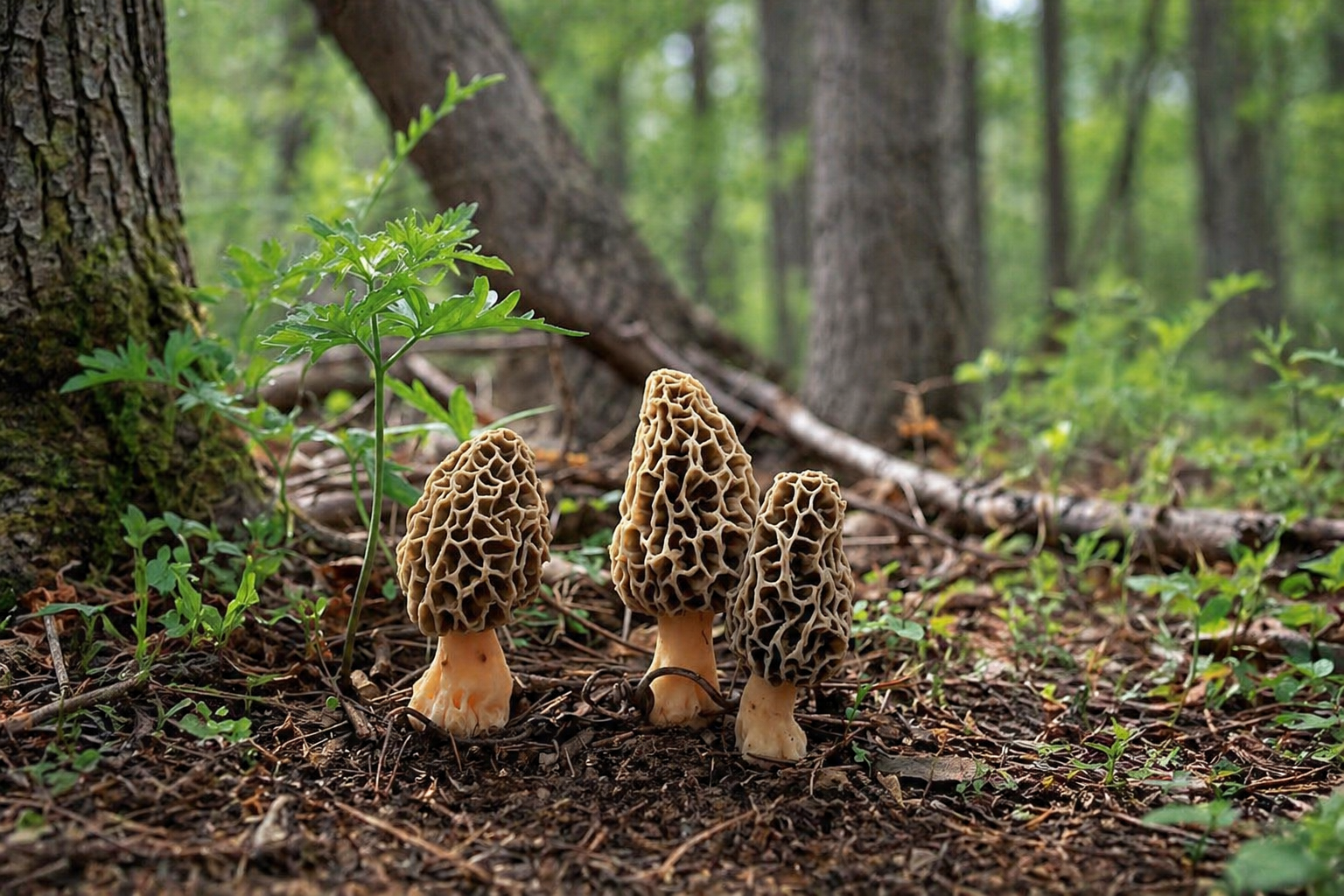
Morels are one of the most sought-after wild mushrooms in the Midwest. Their short season, distinct honeycomb shape, and rich flavor make them part delicacy, part tradition, and part treasure hunt. For longtime hunters, the arrival of morels is less of a hobby and more of a ritual.
Some families keep their favorite hunting spots secret for generations. Others head out after work, watching for warm rains, south-facing hillsides, dead elm trees, and old local advice like waiting until oak leaves are about the size of a squirrel’s ear.
But beyond family tradition, morels also create a small spring economy.
At farmers markets across Iowa, morels can sell quickly and at premium prices. Depending on freshness, supply, and demand, buyers may pay anywhere from around $20 to $30 per pound, with some specialty markets seeing even higher prices during peak demand.
For restaurant chefs, the short season makes them even more valuable. Seasonal kitchens in Iowa City often build limited spring dishes around morels, treating them as a local luxury that disappears almost as quickly as it arrives.
At The Webster, spring menus have highlighted morel mushrooms as part of the restaurant’s seasonal approach to Midwestern ingredients, reflecting how strongly the ingredient is tied to this brief window of the year.
Selling wild mushrooms in Iowa, however, comes with rules.
According to Iowa State University Extension and Outreach, anyone who wants to legally sell wild-harvested mushrooms such as morels must complete the state’s wild mushroom certification workshop. The certification helps ensure sellers can properly identify mushrooms and safely bring them to market.
The list includes morels along with oyster mushrooms, chanterelles, hen of the woods, chicken of the woods, lion’s mane, pheasant back, and black trumpet mushrooms.
That requirement reflects how valuable and specialized the market has become. A successful weekend of hunting can mean far more than a good meal. For some, it helps cover groceries, gas, or a little extra spring income during a short but busy season.
For shoppers heading to the farmers market this weekend, morels represent something that cannot be imported from far away or mass-produced on demand. They belong to this season, this weather, and this place.
That may be part of the reason people love them so much.
For a few weeks every year, ordinary patches of Iowa woods become treasure maps, and the people carrying mesh bags and watching the forest floor know exactly what they are looking for.
Where people around Iowa City go looking for morels
Lake Macbride State Park
A very common local mention. Wooded trails, creek areas, and mature trees make it one of the better-known public places people talk about. Reddit locals specifically mentioned seeing foragers there.
Mormon Handcart Trail
Especially the wooded areas behind sections of the trail. Another local mention from Iowa City foragers.
Coralville Lake / Coralville Reservoir
River bottoms, wooded edges, and creek banks make this a natural morel zone, especially around public access areas.
Kent Park
A favorite for general woodland walking and often mentioned quietly among local foragers because of the timber and moisture-rich terrain.
Hickory Hill Park
Not always productive, but locals often check wooded sections and ravines early in the season.
Rural river bottoms outside town
Johnson County, along the Iowa River, English River areas, and private timber near Lone Tree, Hills, Riverside, and West Branch are classic morel territory—but many of these are private land and require permission.